Car accidents have sometimes shaped important safety reforms in the United States. One of the most well-known tragedies in automotive history is the fatal crash involving Hollywood star Jayne Mansfield in 1967.
The accident shocked the entertainment world and ultimately influenced new safety measures for large trucks on American highways. Today, the crash is remembered not only as a heartbreaking loss but also as a turning point in automotive safety regulation.
This article explains what happened in the Jayne Mansfield car accident, the investigation that followed, the legal and regulatory changes it inspired, and the important lessons for drivers and road safety.
Who Was Jayne Mansfield?
Jayne Mansfield was one of Hollywood’s most famous actresses during the 1950s and 1960s. She was known for her roles in films such as The Girl Can’t Help It and Will Success Spoil Rock Hunter?.
Mansfield was considered a major celebrity of her era and often appeared in films, television shows, and publicity events. Her glamorous image and larger-than-life personality made her a frequent subject of media attention.
She was also the mother of several children, including future actress Mariska Hargitay, who later became famous for starring in the long-running television series Law & Order: Special Victims Unit.
What Happened in the Jayne Mansfield Car Accident?
The fatal accident occurred in the early morning hours of June 29, 1967.
Jayne Mansfield was traveling from Mississippi to Louisiana after a nightclub performance. She was riding in a car with her driver, her attorney, and several children.
Their vehicle was a 1966 Buick Electra traveling on a highway near Slidell.
As the car approached a large tractor-trailer truck on the road, the vehicle suddenly collided with the rear of the truck.
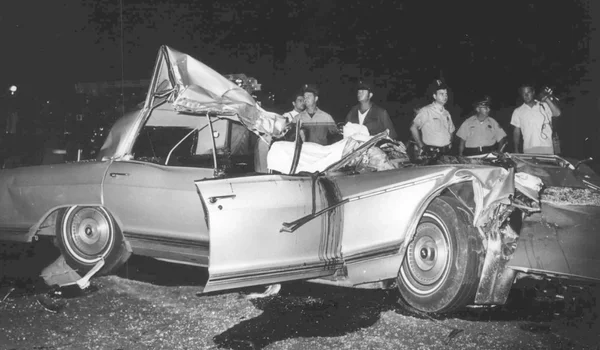
The crash was extremely severe because the car slid underneath the back of the trailer.
Three adults in the front seat—including Jayne Mansfield—were killed instantly. Fortunately, the children riding in the back seat survived the crash, though they suffered injuries.
Why the Accident Was So Deadly
The tragic outcome of the crash was largely due to the design of large trucks at the time.
In the 1960s, many tractor-trailers had a high clearance between the ground and the bottom of the trailer.
When Mansfield’s car struck the truck, it underride beneath the trailer.
An underride accident occurs when a smaller vehicle slides under a truck during a collision.
Because the trailer sits high above the road, the top of the car can be crushed or sheared off during impact.
These types of accidents are extremely dangerous and often fatal for occupants of passenger vehicles.
The Investigation After the Crash
Authorities investigated the accident to determine what happened.
Several factors were identified:
Poor Visibility
Reports suggested that a truck spraying insecticide on the road created a cloud of fog or smoke that reduced visibility.
High Speed
The car was traveling at highway speed when it approached the tractor-trailer.
Lack of Rear Safety Guards
At the time, large trucks did not have protective barriers to prevent underride collisions.
This lack of safety equipment played a major role in the severity of the crash.
The Birth of the “Mansfield Bar”
Following the accident, safety experts and lawmakers began discussing ways to prevent similar tragedies.
The solution was a new safety device known as an underride guard, which is commonly called the “Mansfield Bar.”
The Mansfield Bar is a steel bar installed at the rear of large trailers.
Its purpose is to:
- block smaller vehicles from sliding underneath a truck
- absorb some of the impact during a crash
- reduce fatal injuries in underride accidents
In the early 1970s, federal regulations began requiring large trucks in the United States to install these rear guards.
Today, underride protection is a standard safety feature on commercial trailers.
The Role of Federal Safety Regulations
The Mansfield accident helped accelerate safety improvements in commercial trucking regulations.
Government agencies such as the National Highway Traffic Safety Administration now regulate safety standards for vehicles on American roads.
These regulations include requirements for:
- rear underride guards
- lighting and visibility equipment
- braking systems
- trailer safety design
Although underride accidents still occur, these safety measures have significantly reduced their severity.
Legal Issues Surrounding Underride Accidents
From an automotive law perspective, underride crashes raise complex liability questions.
Several parties may potentially be responsible depending on the circumstances.
Truck Drivers
If a truck driver behaves negligently—for example by stopping unexpectedly or failing to use proper lighting—they may share liability.
Trucking Companies
Companies that own commercial trucks must ensure their vehicles meet safety standards.
Failure to maintain equipment or comply with federal regulations can result in liability.
Vehicle Manufacturers
If a design defect contributes to an accident, manufacturers may face product liability claims.
These claims argue that a vehicle was unsafe due to design or manufacturing problems.
Government Entities
In some cases, poor road design or missing warning signs may contribute to crashes.
However, lawsuits against government agencies are usually subject to special legal rules.
Wrongful Death Claims After Fatal Accidents
When a person dies in a car accident caused by negligence, family members may file a wrongful death lawsuit.
These claims allow surviving relatives to seek compensation for their losses.
Possible damages may include:
- funeral expenses
- loss of financial support
- emotional suffering
- loss of companionship
Wrongful death cases are among the most serious types of personal injury claims.
How Underride Accidents Are Handled Today
Despite safety improvements, underride accidents still occur in modern traffic.
When these crashes happen, legal investigations often examine:
- whether the truck had proper underride guards
- whether the guards met federal safety standards
- whether the truck was properly visible to drivers
- whether driver negligence played a role
Accident reconstruction experts often analyze the crash to determine the sequence of events.
Safety Lessons From the Jayne Mansfield Crash
The tragedy involving Jayne Mansfield provides several important lessons for road safety.
Vehicle Safety Design Matters
The crash showed how design flaws can contribute to fatal accidents.
Regulations Can Save Lives
The introduction of underride guards has prevented many similar tragedies.
Defensive Driving Is Important
Drivers should maintain safe following distances, especially around large trucks.
Visibility Is Critical
Reduced visibility from fog, smoke, or weather can dramatically increase accident risk.
The Legacy of Jayne Mansfield
Although her life ended tragically, Jayne Mansfield’s legacy extends beyond Hollywood.
Her death helped bring attention to a serious safety issue affecting drivers across the country.
Today, the Mansfield Bar remains one of the most well-known examples of how a tragic accident can lead to meaningful safety improvements.
Her daughter, Mariska Hargitay, has often spoken about surviving the crash as a child and has gone on to build a successful acting career and advocacy work.
Final Thoughts
The fatal crash involving Jayne Mansfield remains one of the most historically significant car accidents in American history. While the tragedy shocked the entertainment world, it also prompted important discussions about vehicle safety and highway regulations.
The introduction of underride guards—now widely known as Mansfield Bars—has helped reduce fatalities in similar crashes involving passenger vehicles and large trucks.
From a legal and safety perspective, the case illustrates how accidents can lead to improvements in public safety laws and vehicle design. For everyday drivers, it also serves as a reminder of the importance of cautious driving, especially around large commercial trucks on busy highways.